
Program

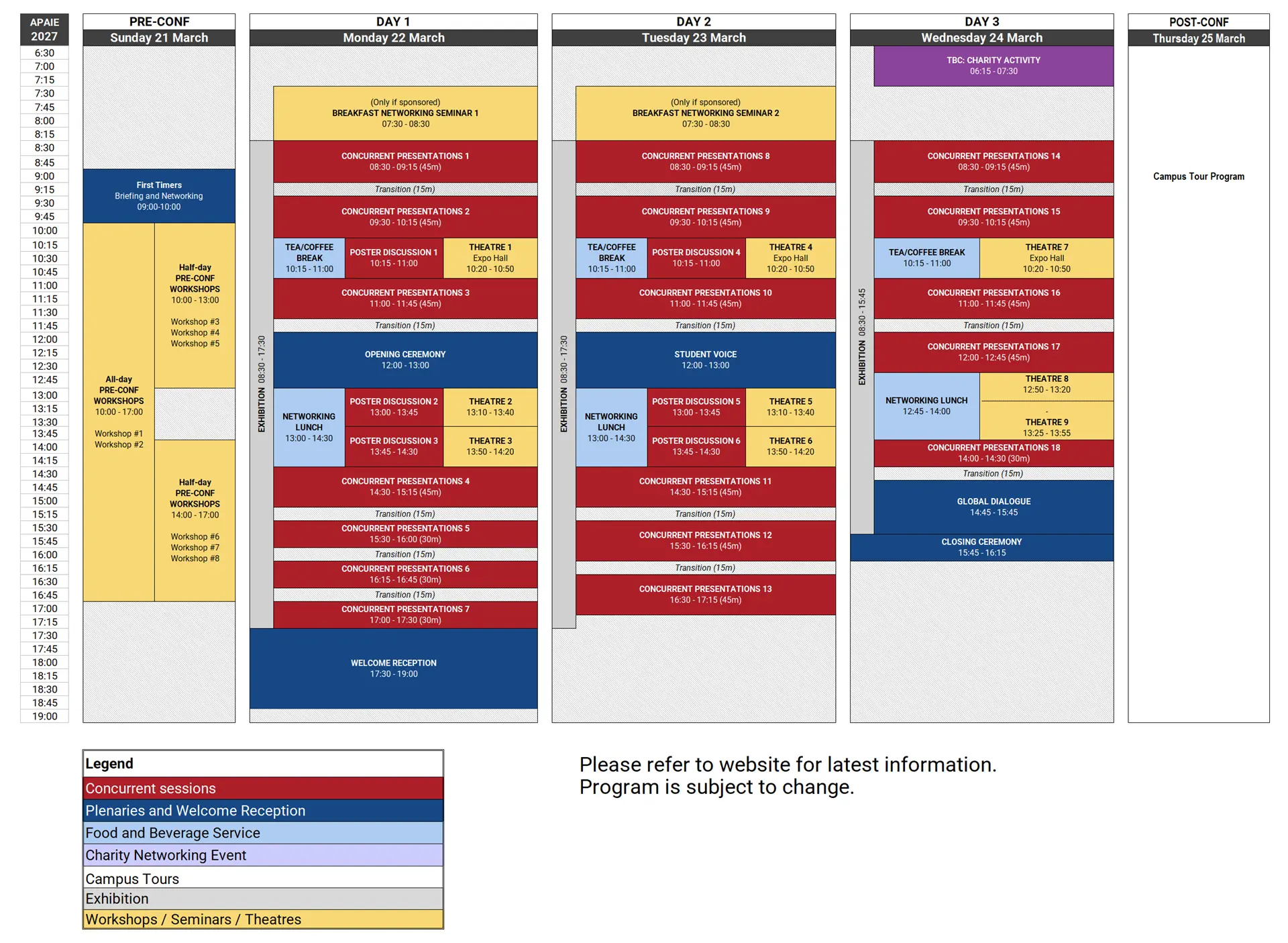
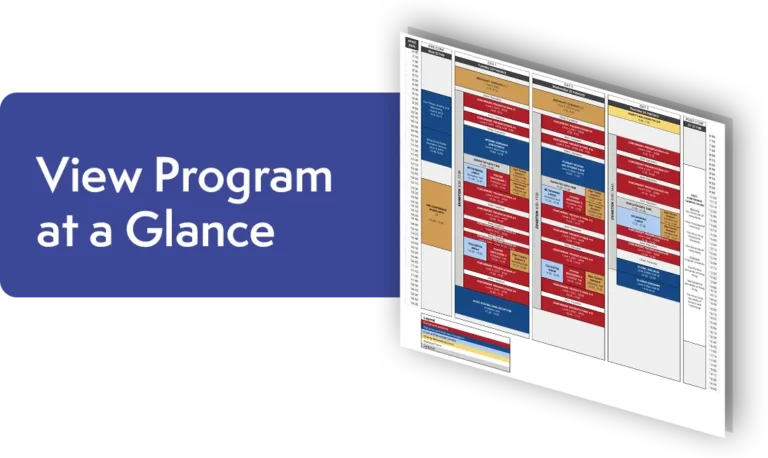
The APAIE 2027 official program is scheduled in Kuala Lumpur, Malaysia Time zone (GMT+8). Check back regularly for updates. Click program to enlarge.

Program at a Glance for APAIE 2027 - As of 27 May, 2026

Program

The APAIE 2027 official program is scheduled in Kuala Lumpur, Malaysia Time zone (GMT+8). To check the program times in your location, use a time zone converter.

As more information becomes available – this page will be updated so please make sure to check back regularly.

Use the tabs to toggle between days. 

Program is best viewed on a desktop or large landscape screen.
09:00-10:00
First Timers Briefing and Networking | Complimentary session
Location: Novel, Level 1A, MITEC

New to APAIE, or joining us in Kuala Lumpur for the first time? This informal, practical session will help you make the most of your APAIE 2027 experience. You’ll gain an understanding of APAIE, the APAIE 2027 conference and exhibition, and your host city, Kuala Lumpur.

Delving into the APAIE 2027 program, we’ll highlight key sessions and networking opportunities. You’ll gain tips on navigating the venue and connecting with colleagues from across the region and the world. Networking activities will ensure you make new connections before the conference even begins. Experts (students) will provide important advice to make the most of your time in Kuala Lumpur (yes, they will mention food!). You’ll leave with a clearer plan for your APAIE week, along with a sense of excitement to explore your surrounds. Ideal for first-timers, new roles, or anyone wanting a refresher
10:00-13:00
Location: MY 11, Level 1A, MITEC
Cost: $175
Includes: morning tea, lunch and afternoon tea

Workshop details ->
Location: MY 9, Level 1A, MITEC
Cost: $175
Includes: morning tea, lunch and afternoon tea

Workshop details ->
Location: MY 05–08, Level 1A, MITEC
Cost: $100
Includes: morning tea

Workshop details ->
Location: MY 01–04, Level 1A, MITEC
Cost: $100
Includes: morning tea

Workshop details ->
Location: MY 10, Level 1A, MITEC
Cost: $100
Includes: morning tea

Workshop details ->
14:00-17:00
Location: MY 05–08, Level 1A, MITEC
Cost: $100
Includes: afternoon tea

Workshop details ->
Location: MY 01–04, Level 1A, MITEC
Cost: $100
Includes: afternoon tea

Workshop details ->
Location: MY 10, Level 1A, MITEC
Cost: $100
Includes: afternoon tea

Workshop details ->
07:30-08:30
CONCURRENTS
EXHIBITION
08:30-09:15
CONCURRENT 1A
CONCURRENT 1B
CONCURRENT 1C
CONCURRENT 1D
CONCURRENT 1E
CONCURRENT 1F
Stream
Title

Session title

Chair: First name LAST NAME, position | Country/region

Session title

Chair: First name LAST NAME, position | Country/region

Session title

Chair: First name LAST NAME, position | Country/region

Session title

Chair: First name LAST NAME, position | Country/region

Session title

Chair: First name LAST NAME, position | Country/region

Session title

Chair: First name LAST NAME, position | Country/region

09:15-09:30
15min Session Transition
CONCURRENTS
09:30-10:15
CONCURRENT 2A
CONCURRENT 2B
CONCURRENT 2C
CONCURRENT 2D
CONCURRENT 2E
CONCURRENT 2F
Stream
Title

Session title

Chair: First name LAST NAME, position | Country/region

Session title

Chair: First name LAST NAME, position | Country/region

Session title

Chair: First name LAST NAME, position | Country/region

Session title

Chair: First name LAST NAME, position | Country/region

Session title

Chair: First name LAST NAME, position | Country/region

Session title

Chair: First name LAST NAME, position | Country/region

10:15-11:00
Morning tea
Poster discussion 1
CONCURRENTS
11:00-11:45
CONCURRENT 3A
CONCURRENT 3B
CONCURRENT 3C
CONCURRENT 3D
CONCURRENT 3E
CONCURRENT 3F
Stream
Title

Session title

Chair: First name LAST NAME, position | Country/region

Session title

Chair: First name LAST NAME, position | Country/region

Session title

Chair: First name LAST NAME, position | Country/region

Session title

Chair: First name LAST NAME, position | Country/region

Session title

Chair: First name LAST NAME, position | Country/region

Session title

Chair: First name LAST NAME, position | Country/region

11:45-12:00
15min Session Transition
12:00-13:00
Opening ceremony and keynote
Join us for the APAIE 2027 Opening Ceremony and Keynote!

The Opening Ceremony welcomes delegates from around the world to explore “Asia-Pacific partnerships for the global good”; and the keynote, delivered the by award-winning Mr Robin Lee, sets a unique and inspirational tone for the APAIE 2026 week.

Keynote

Mr. Robin LEE, is an award-winning Hong Kong filmmaker and cinematographer. Robin’s debut documentary Four Trails captured the 298-kilometre Hong Kong Ultra Challenge and earned the Best New Director Award at the 43rd Hong Kong Film Awards. The film became Hong Kong’s second highest-grossing documentary, praised for stunning visuals and emotional depth.

Born and raised in Hong Kong, Robin studied locally before earning an Engineering and Sports Science degree from the University of Birmingham. His career began in adventure sports, producing ski films and working with global brands like The North Face and Hoka One. Four Trails was a self-funded passion project completed over three years, focusing on everyday individuals. Robin hopes audiences can draw a parallel between the athletes’ journeys and their own lives and gain confidence to take on new challenges ahead.
13:00-14:30
Networking lunch
Poster discussion 2
13:00 – 13:45
Poster discussion 3
13:45 – 14:30
CONCURRENTS
14:30-15:15
CONCURRENT 4A
CONCURRENT 4B
CONCURRENT 4C
CONCURRENT 4D
CONCURRENT 4E
CONCURRENT 4F
Stream
Title

Session title

Chair: First name LAST NAME, position | Country/region

Session title

Chair: First name LAST NAME, position | Country/region

Session title

Chair: First name LAST NAME, position | Country/region

Session title

Chair: First name LAST NAME, position | Country/region

Session title

Chair: First name LAST NAME, position | Country/region

Session title

Chair: First name LAST NAME, position | Country/region

15:15-15:30
15min Session Transition
CONCURRENTS
15:30-16:00
CONCURRENT 5A
CONCURRENT 5B
CONCURRENT 5C
CONCURRENT 5D
CONCURRENT 5E
CONCURRENT 5F
Stream
Title

Session title

Chair: First name LAST NAME, position | Country/region

Session title

Chair: First name LAST NAME, position | Country/region

Session title

Chair: First name LAST NAME, position | Country/region

Session title

Chair: First name LAST NAME, position | Country/region

Session title

Chair: First name LAST NAME, position | Country/region

Session title

Chair: First name LAST NAME, position | Country/region

16:00-16:15
15min Session Transition
CONCURRENTS
16:15-16:45
CONCURRENT 6A
CONCURRENT 6B
CONCURRENT 6C
CONCURRENT 6D
CONCURRENT 6E
CONCURRENT 6F
Stream
Title

Session title

Chair: First name LAST NAME, position | Country/region

Session title

Chair: First name LAST NAME, position | Country/region

Session title

Chair: First name LAST NAME, position | Country/region

Session title

Chair: First name LAST NAME, position | Country/region

Session title

Chair: First name LAST NAME, position | Country/region

Session title

Chair: First name LAST NAME, position | Country/region

16:45-17:00
15min Session Transition
CONCURRENTS
17:00-17:30
CONCURRENT 7A
CONCURRENT 7B
CONCURRENT 7C
CONCURRENT 7D
CONCURRENT 7E
CONCURRENT 7F
Stream
Title

Session title

Chair: First name LAST NAME, position | Country/region

Session title

Chair: First name LAST NAME, position | Country/region

Session title

Chair: First name LAST NAME, position | Country/region

Session title

Chair: First name LAST NAME, position | Country/region

Session title

Chair: First name LAST NAME, position | Country/region

Session title

Chair: First name LAST NAME, position | Country/region

17:30-19:00
APAIE WELCOME RECEPTION

Information is being prepared. 

07:30-08:30
CONCURRENTS
EXHIBITION
08:30 – 17:30
08:30-09:15
CONCURRENT 8A
CONCURRENT 8B
CONCURRENT 8C
CONCURRENT 8D
CONCURRENT 8E
CONCURRENT 8F
Stream
Title

Session title

Chair: First name LAST NAME, position | Country/region

Session title

Chair: First name LAST NAME, position | Country/region

Session title

Chair: First name LAST NAME, position | Country/region

Session title

Chair: First name LAST NAME, position | Country/region

Session title

Chair: First name LAST NAME, position | Country/region

Session title

Chair: First name LAST NAME, position | Country/region

09:15-09:30
15min Transition
CONCURRENTS
09:30-10:15
CONCURRENT 9A
CONCURRENT 9B
CONCURRENT 9C
CONCURRENT 9D
CONCURRENT 9E
CONCURRENT 9F
Stream
Regional Update Series: Hong Kong
Partnerships and mobility
Student experience and well-being
Programs
Title
Regional Update Series: Hong Kong Driving Innovation and Global Impact: Hong Kong’s Research Excellence
Academic Mobility for Employability: Strengthening Korean and German Educational, Cultural, and Economic Exchange
Global Insights, Local Roots: A Case Study of University–Community Collaboration in Nepal
Raising international students’ success and satisfaction: A five-year case study of immersive block learning
Forging Paths to Global Careers: Japan’s 2024–2030 Social Impact Initiative and the Role of Virtual Internationalization

Session title

Chair: First name LAST NAME, position | Country/region

Session title

Chair: First name LAST NAME, position | Country/region

Session title

Chair: First name LAST NAME, position | Country/region

Session title

Chair: First name LAST NAME, position | Country/region

Session title

Chair: First name LAST NAME, position | Country/region

Session title

Chair: First name LAST NAME, position | Country/region

10:15-11:00
MORNING TEA
POSTER DISCUSSIONS 4
CONCURRENTS
11:00-11:45
CONCURRENT 10A
CONCURRENT 10B
CONCURRENT 10C
CONCURRENT 10D
CONCURRENT 10E
CONCURRENT 10F
Stream
Title

Session title

Chair: First name LAST NAME, position | Country/region

Session title

Chair: First name LAST NAME, position | Country/region

Session title

Chair: First name LAST NAME, position | Country/region

Session title

Chair: First name LAST NAME, position | Country/region

Session title

Chair: First name LAST NAME, position | Country/region

Session title

Chair: First name LAST NAME, position | Country/region

11:45-12:00
15min Session Transition
12:00-13:00
STUDENT VOICE
Join us for the APAIE 2027 Opening Ceremony and Keynote!

The Opening Ceremony welcomes delegates from around the world to explore “Asia-Pacific partnerships for the global good”; and the keynote, delivered the by award-winning Mr Robin Lee, sets a unique and inspirational tone for the APAIE 2026 week.

Keynote

Mr. Robin LEE, is an award-winning Hong Kong filmmaker and cinematographer. Robin’s debut documentary Four Trails captured the 298-kilometre Hong Kong Ultra Challenge and earned the Best New Director Award at the 43rd Hong Kong Film Awards. The film became Hong Kong’s second highest-grossing documentary, praised for stunning visuals and emotional depth.

Born and raised in Hong Kong, Robin studied locally before earning an Engineering and Sports Science degree from the University of Birmingham. His career began in adventure sports, producing ski films and working with global brands like The North Face and Hoka One. Four Trails was a self-funded passion project completed over three years, focusing on everyday individuals. Robin hopes audiences can draw a parallel between the athletes’ journeys and their own lives and gain confidence to take on new challenges ahead.
13:00-14:30
NETWORKING LUNCH
POSTER DISCUSSIONS 5
13:00 – 13:45
POSTER DISCUSSIONS 6
13:45 – 14:30
CONCURRENTS
14:30-15:15
CONCURRENT 11A
CONCURRENT 11B
CONCURRENT 11C
CONCURRENT 11D
CONCURRENT 11E
CONCURRENT 11F
Stream
Title

Session title

Chair: First name LAST NAME, position | Country/region

Session title

Chair: First name LAST NAME, position | Country/region

Session title

Chair: First name LAST NAME, position | Country/region

Session title

Chair: First name LAST NAME, position | Country/region

Session title

Chair: First name LAST NAME, position | Country/region

Session title

Chair: First name LAST NAME, position | Country/region

15:15-15:30
15min Transition
CONCURRENTS
15:30-16:00
CONCURRENT 12A
CONCURRENT 12B
CONCURRENT 12C
CONCURRENT 12D
CONCURRENT 12E
CONCURRENT 12F
Stream
Title
16:15-16:30
15min Transition
CONCURRENTS
16:30-17:15
CONCURRENT 13A
CONCURRENT 13B
CONCURRENT 13C
CONCURRENT 13D
CONCURRENT 13E
CONCURRENT 13F
Stream
Title

Information is being prepared. 

06:30-07:30
FOOTPRINTS OF CHANGE: HARBOUR RUN AND TAI CHI
Enhance your APAIE 2026 experience with an energising wellness morning on the stunning Hong Kong harbour front – all for an important cause. View details
CONCURRENTS
EXHIBITION
08:30 – 14:45
08:30-09:15
CONCURRENT 16A
Room S421
CONCURRENT 16B
Room S422
CONCURRENT 16C
Room S423-S424
CONCURRENT 16D
Room S425
CONCURRENT 16E
Room S426
CONCURRENT 16F
Room S427
Stream
Partnerships and mobility
Student recruitment
Programs
Partnerships and mobility
Programs
Partnerships and mobility
Title
Cultivating Partnerships for the Global Good: The Role of Universities in Fostering International Alliances that Improve Lives
Reimagining Global Engagement: AI Tools, Ethics, and Institutional Readiness
Beyond Exchange: Reimagining Global Learning Through Immersive Co-Teaching and Co-Project Models
Asia-Pacific Universities as Engines of Change: Collaborating for Sustainability and Impact
Beyond Study Abroad: Inclusive Strategies for Developing and Measuring Global Competence Across Contexts
Empowering Global Learners: Sustaining Impactful Student Mobility through an Indonesia-Singapore Collaboration

Cultivating Partnerships for the Global Good: The Role of Universities in Fostering International Alliances that Improve Lives

Chair: Aditya MALKANI, Regional Director, Membership APAC, The Association of Commonwealth Universities | India

Aditya MALKANI, Regional Director, Membership APAC, The Association of Commonwealth Universities | India
Liam ROBERTS, Regional Head for China, University of Exeter | United Kingdom

Abstract:

In a world fraught with environmental uncertainties, rising inequities & technological disruption – active collaboration between countries is more crucial than ever before. Commonwealth Universities have the capacity to provide solutions to some of the world’s most ‘wicked’ problems and are crucial to driving human progress in a range of domains & disciplines. In pursuit of the ‘greater good’, universities must be encouraged to cooperate with one another to develop equitable and sustainable partnerships.

The Association of Commonwealth Universities (ACU) is a global network of more than 400 universities in over 40 countries with a shared commitment to working together to build a more equitable and sustainable world. University of Exeter is one of the UK’s leading universities and a member of the prestigious Russell Group of research intensive universities.

In this panel discussion the panellists will share how the ACU works to Strengthen Commonwealth universities, Support sustainable development and Connect engaged leaders. Panellists will also discuss a practical example of the Indo-UK Sports Science Alliance being developed by University of Exeter (UK) and Indian Institute of Technology Delhi (India), where the two world-leading institutions will combine complementary expertise in Sport Science, Rehabilitation, and Elite

Performance, all for the greater good.

Learning objectives:

Audience will learn:

  • How an equitable approach to partnership building can be most effective in developing sustainable partnerships (across domains and disciplines).
  • Why international university networks can be such powerful catalysts (i.e. force multipliers) in forging internationalpartnerships?
  • What universities (despite their different locations and diverse cultures) can achieve for the ‘greater good’ when they come together with each other and other important stakeholders

Target audience:

Those working in developing university partnerships will gain most from this session – especially those working in developing international research partnerships.

Reimagining Global Engagement: AI Tools, Ethics, and Institutional Readiness

Chair: Blair Thomson, Senior International Officer and Director of Study Abroad, University of Mississippi | United States

Blair THOMSON, Senior International Officer and Director of Study Abroad, University of Mississippi | United States
Girish BALLOLLA, Founder and CEO, Gen Next Education | United States
Olivia GEORGE, International Student Advisor, University of Mississippi | United States

Abstract:

Artificial Intelligence (AI) is rapidly transforming international education, offering innovative ways to support recruitment, streamline communication, improve cultural competence, and optimize institutional resources. This session provides internationalization professionals with a practical and critical look at how AI tools can be applied across key functions, including data analysis, translation, outreach, and risk management, while also addressing the challenges of ethical use and institutional readiness.

Through real-world case studies and lessons learned from the field, presenters will examine what has worked, what hasn’t, and why. They will explore issues such as data privacy, algorithmic bias, and the cultural implications of deploying AI across diverse international contexts. Attendees will be invited to reflect on their own institutional challenges and engage in discussion around measurable outcomes, adoption strategies, and responsible implementation.

Whether new to AI or already experimenting with its potential, attendees will leave with insights they can apply immediately, along with a deeper understanding of how to balance innovation with integrity in internationalization. This session is especially relevant for educators, administrators, and vendors working at the intersection of technology and global engagement who are seeking to use AI for efficiency and also for inclusive and ethical impact.

Learning objectives:

After the session, the audience will be able to:

  • Identify and apply AI tools that enhance international education efforts, including recruitment, communication, cultural competence, and resource optimization.
  • Evaluate ethical and institutional challenges related to AI adoption, such as data privacy, cultural sensitivity, and technological readiness.
  • Develop practical strategies to implement or scale AI-driven initiatives using real-world examples, best practices, and lessons learned from the field.

Target audience:

This session is designed for international education professionals, including institutional leaders, recruitment officers, program managers, and educational service providers, who are exploring how artificial intelligence can support and scale internationalization efforts.

Beyond Exchange: Reimagining Global Learning Through Immersive Co-Teaching and Co-Project Models

Chair: Kevin KOH, Head, SMU-X, Singapore Management University | Singapore

Kevin KOH, Head, SMU-X, Singapore Management University | Singapore
Derek CHIANG, Senior Manager (Senior Development Partner), Singapore Management University | Singapore

Abstract:

As global challenges grow in complexity, universities must go beyond traditional models of internationalisation to equip students with the intercultural fluency, adaptability, and problem-solving skills needed to lead in a fractured world. This session explores how Singapore Management University (SMU) reimagines global learning through SMU-X and SMU-X Overseas (SMU-XO) – interdisciplinary, project-based learning programmes that embed immersive global experiences into the curriculum.

Participants will learn how SMU integrates co-teaching, open-ended real-world challenges, and cross-cultural mentorship into collaborative courses with international partners. Drawing from over 6,000 completed projects including joint modules with universities in Australia, Vietnam, Japan, and beyond, this session highlights how intentional design fosters student agency, intercultural competence, and resilience.

Presenters will also share models for global co-projects that balance academic rigour with flexibility, support equitable partnerships, and encourage reflection as a core learning process. This session invites institutions to rethink global education not as mobility, but as meaningful, transformative collaboration across borders.

Learning objectives:

  • Explore how interdisciplinary, project-based learning can enhance global education.
  • Understand the principles and practices of immersive co-teaching and co-project course design.
  • Learn how to scaffold intercultural competence and student agency through real-world challenges and reflection.
  • Gain insights from tested models of SMU-X/SMU-XO collaborations with international partners.
  • Identify key strategies to build equitable, scalable, and resilient global learning partnerships.

Target audience:

Academic leaders, international partnership directors, faculty, instructional designers, and global engagement professionals seeking innovative, sustainable, and student-centred approaches to cross-border collaboration and transformative global learning.

Asia-Pacific Universities as Engines of Change: Collaborating for Sustainability and Impact

Chair: Ngoc Ninh NGUYEN, Vice President, Phenikaa University | Vietnam

Mei Mei LIM, President, Asia-Pacific, Times Higher Education | Singapore
Angie LEE, Deputy Director, Hanyang University | South Korea

Abstract:

Asia-Pacific universities are emerging as powerful engines of change—mobilising innovation, community engagement, and global collaboration to address the world’s most urgent challenges. This session explores how institutions in the region are leveraging the Sustainable Development Goals (SDGs) to forge partnerships that are both locally grounded and globally recognised.

Drawing on data from Times Higher Education’s Sustainability framework, the session will explore regional trends and provide key insights into Asia-Pacific universities’ progress against the SDGs. The session will highlight examples of institutions using SDG data to engage with new partners from universities and governments to industry and civil society, and to drive change.

Hanyang University will showcase its leadership in innovation with impact by presenting key initiatives—such as the Ansan Smart City and Robotics Innovation Zone, the Homeless World Cup, and its designation as an ASHOKA U Changemaker Campus—as forward-looking examples of how regional universities integrate strategic partnerships, applied research, and local engagement with a strong international outlook.

Together, the speakers will offer a roadmap for how Asia-Pacific institutions can position themselves at the forefront of sustainable development—achieving both social impact and global influence through purposeful, data-informed partnerships.

Learning objectives:

  • Explore how Asia-Pacific universities are leveraging the SDGs to position themselves as regional innovation hubsand global changemakers.
  • Hear examples of regional best practice for sustainability-focused research collaborations across Asia andemerging trends in regional higher education sustainability practices
  • Gain insights from Hanyang University’s initiatives on how universities can integrate local innovation, mobility, and sustainability into their global engagement strategies.

Target audience:

  • Internationalisation and global strategy leaders at Asia-Pacific universities
  • Directors of sustainability, partnerships, and mobility programmes
  • Government agencies and NGOs focused on education and regional development
  • Researchers and faculty involved in SDG initiatives and innovation ecosystems

Beyond Study Abroad: Inclusive Strategies for Developing and Measuring Global Competence Across Contexts

Chair: Isadora HELFGOTT, Vice Provost (Global Engagement), University of Wyoming | United States

Nordin YAHAYA, Vice President, Ge4 Network | Malaysia
Isadora HELFGOTT, Vice Provost (Global Engagement), University of Wyoming | United States
Abdul Latiff AHMAD, Associate Professor, Universiti Kebangsaan Malaysia | Malaysia

Abstract:

This session explores how universities are developing globally competent graduates through inclusive and borderless strategies—particularly for students who may never have the opportunity to study abroad. It focuses on institutional efforts to embed global learning into academic and co-curricular experiences for non-mobile students, especially in rural or underserved regions such as the Mountain West USA and Southeast Asia.

Key strategies highlighted include internationalisation-at-home initiatives such as virtual exchange, global community engagement, and curriculum integration. These interventions enable intercultural learning and global engagement without requiring physical mobility, supporting a more equitable approach to internationalisation.

The session also introduces the GlobaX initiative, a hybrid global competence assessment tool co-developed by Universiti Teknologi Malaysia and the University of Wyoming, with contributions from Universiti Kebangsaan Malaysia and a consortium of international partners. GlobaX integrates self-report surveys with situational judgment tests (SJTs) to assess both perceived and demonstrated global competence, offering a culturally adaptive and scalable framework suitable for diverse educational settings.

Together, these approaches demonstrate how institutions can leverage hybrid assessment, inclusive design, and cross-border collaboration to enhance global competence for all learners—on campus, online, and across borders. Practical models and lessons learned will be shared for institutional adaptation and implementation.

Learning objectives:

  • Understand how cross-border collaboration enables the co-creation of scalable, culturally responsive global learningstrategies.
  • Explore inclusive approaches to developing global competence among non-mobile students, including digital learning,virtual mobility, and community-based programs.
  • Learn how hybrid assessment tools such as GlobaX can effectively measure both perceived and demonstrated global competence across diverse educational contexts.

Target audience:

Higher education leaders, internationalization strategists, curriculum developers, global engagement professionals, and researchers interested in inclusive mobility, transnational education, and the development and assessment of intercultural and global competence among diverse student populations.

Empowering Global Learners: Sustaining Impactful Student Mobility through an Indonesia-Singapore Collaboration

Chair: Leslie CHAN, Chair-Presenter, Temasek Polytechnic | Singapore

Rina DESITARAHMI, Presenter, Universitas Islam Indonesia | Indonesia
Joni Aldilla FAJRI, Presenter, Universitas Islam Indonesia | Indonesia
Leslie CHAN, Chair-Presenter, Temasek Polytechnic | Singapore

Abstract:

In alignment with the APAIE 2026 theme, “Asia-Pacific Partnerships for the Global Good,” Universitas Islam Indoneia (UII) and Temasek Polytechnic (TP), Singapore have forged a dynamic collaboration aimed at enhancing student experiences through inclusive, experential learning.  This partnership exemplifies how regional initiatives can nurture global citizenship and intercultural competence.

Key initiatives include the virtual D.I.Y. (Diversity.Inclusion.You) programme in 2021 and 2022, which fostered connections between UII and TP students; the GLOBAL SEA (Global & Local Engagement Between Singapore and Indonesia) programme in Yogyakarta in 2023, featuring academic sessions, cultural immersion, industry visits, and interpersonal engagement; UII students explored innovation and entrepreneurship at TP’s Makerspace lab, while TP students visited UII in 2024 for company visits and academic exchanges. The exchange continued in 2025 with the Global Studies Overseas Students Trip at UII, focusing on the Sustainable Development Goals (SDGs).

These exchanges have provided students and staff with transformative experiences beyond traditional classroom learning.  This presentation will explore how such programmes contribute to sustainable development, highlight practical strategies for inclusive mobility, and share reflective questions that deepen learning impact.  It will also examine how experiential learning can be scaled and sustained to advance the global-local engagement through education.

Learning objectives:

  • Discover how experential learning fosters global citizenship and intercultural competence.
  • Learn practical strategies for designing inclusive mobility programmes across ASEAN.
  • Explore the impact of academic travel, focusing on personal growth and social capital.
  • Reflect on how experiential learning can be scaled and sustained for long-term educational impact.
  • Appreciate the value of cultural immersion and global-local community engagement in shaping student perspectives.
  • Be inspired to initiate or enhance mobility programmes that advance global-local engagement through education.
  • Empower long-term collaboration through a strong partnership in mobility to foster SDGs.

Target audience:

This session will benefit international educators, programme designers, student mobility coordinators, and those working in sustainability, experiential learning, including global or ASEAN partnerships.  It is especially relevant for institutions advancing the SDGs and and inclusive global good engagements.

09:15-09:20
5min Transition
CONCURRENTS
09:20-10:05
CONCURRENT 17A
Room S421
CONCURRENT 17B
Room S422
CONCURRENT 17C
Room S423-S424
CONCURRENT 17D
Room S425
CONCURRENT 17E
Room S426
CONCURRENT 17F
Room S427
Stream
Partnerships and mobility
Student recruitment
Partnerships and mobility
Academic Research Stream
Programs
Partnerships and mobility
Title
Sustainable, Strategic Mobility: Building Global Partnerships for Good
Rethinking Student Recruitment for International Branch Campuses
Partnerships to pathways: University access for Asia’s most vulnerable
Filling the Gaps: The Role of Japanese Language Schools in Connecting International Students to Japanese Universities

COIL as a driver for Global Interprofessional Learning in Health Education
DIU’s Best Practice: International Internship Program (IIP) for Global Workforce
Global Classrooms, Local Campuses: International Visiting Faculty as Front Doors to Cross-Border Collaboration in the Asia-Pacific

Sustainable, Strategic Mobility: Building Global Partnerships for Good

Chair: Sylvia Sieler JONS, Director, IIE Center for International Partnerships, IIE | United States

Vivian WANG, Senior International Officer, University of Tulsa | United States
Pauline HO, Head, Global Education Partnerships, Nanyang Technological University | Singapore
Cindy LAM, Education Specialist, U.S. Consulate General Hong Kong and Macau | Hong Kong
Viva DU, Head of International Progams, Shanghai Jiao Tong University | China

Abstract:

As global engagement evolves, institutions seek student mobility programs that are sustainable, inclusive, and aligned with long-term goals. This session brings together leaders from Asia and the U.S. to showcase innovative models that advance access, equity, and collaboration in international education.

Sylvia Jons, Chair and Director of the IIE Center for International Partnerships, will open with key trends in Asia-Pacific partnerships, using IIE’s Open Doors data to highlight emerging mobility patterns, policy shifts, and regional priorities.

A featured example is the IIE Global E3 Engineering Consortium, a 30-year-old tuition-swap network linking 70+ institutions worldwide. Global E3 demonstrates how mission-aligned, cost-effective models can support multilateral mobility and expand student access. All presenters are members of this international engineering consortium.

Panelists will also present case studies from their institutions, exploring how they:

  • Integrate global learning into programs (e.g., dual degrees at Tulsa)
  • Broaden participation across disciplines and demographics
  • Build long-term partnerships that advance global learning and the public good (e.g., NTU’s global good initiative)

Attendees will leave with data-informed insights and adaptable strategies to scale sustainable, inclusive student mobility initiatives.

Learning objectives:

  • Understand current trends and data related insights in higher education partnership landscape
  • Identify key components of sustainable and strategic global partnerships
  • Explore inclusive approaches to student mobility, including tuition-swap models
  • Understand how to expand participation among underrepresented student groups
  • Learn from real-world examples such as the IIE Global E3 Consortium
  • Apply insights to design or improve institutional mobility strategies aligned with global priorities

Target audience:

This session is ideal for international office leaders, mobility program coordinators, and partnership strategists working in global engagement, student exchange, STEM mobility, equity/access, or cross-regional collaboration between institutions that prioritize global good in partnerships.

Rethinking Student Recruitment for International Branch Campuses

Chair: Mahnaaz KHAN, Director, Trade & Investment Austrade | India

Jeroen PRINSEN, Executive Director APAC, QS Quacquarelli Symonds | Australia
Sagar BAHADUR, Executive Director – Asia & Head of Regional Strategy, Acumen | India
Nicolene MURDOCH, Pro Vice-Chancellor: Global Partnerships & Transnational Education, Western Sydney University | Australia

Abstract:

As international universities establish branch campuses in new geographies, student recruitment strategies must evolve beyond traditional models. This panel will explore how global institutions can effectively build and sustain student pipelines for their in-country campuses. Discussions will focus on the intersection of transnational education, brand positioning, policy frameworks, and student behavior. We’ll examine what attracts students to study at international branch campuses locally, how to engage with parents and agents differently, and how digital tools, local partnerships, and community integration are shaping new recruitment models.

Learning objectives:

  • Understand the evolving expectations of students and parents when considering international education at home.
  • Explore new models of localized recruitment for international branch campuses.
  • Discover strategies to differentiate the branch campus experience from both domestic and overseas study options. Gain insights into policy frameworks and how to position the branch campus as a compelling choice.

Target audience:

Education Institutions, Recruitment teams, education agents, school leaders, edtech

Partnerships to pathways: University access for Asia’s most vulnerable

Chair: Jonathan LEMBRIGHT, Southeast Asia Director, IIE | Thailand

Rebecca GRANATO, Associate Vice President, Bard College | Bangladesh
Ian HOLIDAY, Vice-President, University of Hong Kong | Hong Kong
Brett BLACKER, Managing Director Australia & New Zealand Duolingo | Australia

Abstract:

Providing higher education opportunities for displaced students requires a network of partnerships to facilitate access and degree completion.

The Asia Pacific region has an estimated 20 million forcibly displaced people facing a mix of complex challenges that includes conflict, climate change, and economic unrest. This number has doubled since 2020 and is expected to continue to rise within a climate of decreased donor funding.

Yet among these numbers are thousands of resilient, ambitious individuals seeking higher education opportunities that draw on their talents and unique life experiences.

This session will begin by providing an overview of displaced students in Asia Pacific and the role of higher education. The essential role of partnerships will be explored within the context of pathways to access for students, as well as specific challenges and opportunities for those looking to deepen their engagement. The region has a unique opportunity to serve these students, through the thousands of high quality institutions and existing partnerships.

Unique examples of partnerships in support of access will be provided by the University of Hong Kong, Bard College (USA), Refugee Education Australia, and the Institute of International Education (IIE). We will also highlight existing global support organizations and consortia in place that universities can consult as they develop opportunities for these unique students.

Learning objectives:

  1. Understand the profile of displaced students, how to identify, and how to engage within the Asia Pacific region.
  2. Best practices for establishing effective partnerships and pathways to enrollment for displaced students.
  3. Increase awareness of opportunities for universities in the region to engage, partner, and collaborate on this topic.

Target audience:

University representatives, non-profit leaders, and policymakers working with partners and students in fragile and sensitive contexts.

Chair: Jane BARRON, Transitions-Care and Mobility Consultant, Council of International Schools (CIS) | Australia

Filling the Gaps: The Role of Japanese Language Schools in Connecting International Students to Japanese Universities
Kanako NAKASHIMA, Research Associate, Tohoku University | Japan

Abstract:

Japan is accelerating its efforts to attract and retain highly skilled international students. However, the complexity of its admission system poses significant challenges for applicants. While national policies emphasize strategic recruitment and the global competitiveness of Japanese universities, institutions lack the capacity to provide consistent, accessible, and multilingual information to prospective students. This results in significant information asymmetries, even for applicants from elite educational backgrounds, who often lack the specific localized knowledge required to navigate the Japan’s complex and admissions system.

This study investigates the mediating role of Japanese language schools between international students and Japanese universities. Although traditionally positioned as institutions supporting students’ language development, Japanese language schools in Japan have increasing expanded their roles to include broader forms of support such as advising on university applications, interpreting institutional requirements, and facilitating access to higher education. While such functions have typically been the focus of research on educational agents, drawing on theories of information asymmetry and literacy mediation, this conceptual paper examines how these schools compensate for systemic weaknesses in Japan’s international student admission process for higher education.

The research adopts a qualitative design based on semi-structured interviews with staff at Japanese language schools. This conceptual paper presents a detailed research design and preliminary findings from an ongoing study. The purpose of this study is to examine how Japanese language schools mediate the institutional and informational gaps that shape international students’ access to higher education in Japan. While a full analysis is still underway, the final presentation will include preliminary findings from semi-structured interviews with Japanese language school staff, providing empirical insights into how these mediating functions are enacted in practice.

The insights from this study will clarify the role of private actors in supporting the internationalization of Japanese higher education and inform policy discussions on creating a more transparent and coordinated information platform for prospective international students in Japan. By highlighting the mediating role of language schools between international students and Japanese universities, this study contributes to a more nuanced understanding of institutional responsibility and equity within internationalization strategies of Japanese universities.

COIL as a driver for Global Interprofessional Learning in Health Education
Inge VERVOORT, Head International Office, Thomas More University of Applied Sciences | Belgium

Abstract:

Background & objective: Internationalisation at Home is a key strategy for developing global and collaborative competencies in health education. We evaluated a Collaborative Online International Learning (COIL) module, co-developed by higher education institutions in Belgium, the Philippines, and Kenya, for its effectiveness in strengthening interprofessional collaboration skills and professional identity.

Methods: A pre-post design was implemented, with stable, interprofessional student groups collaborating online. The Interprofessional Collaborator Assessment Rubric (ICAR) and the Extended Professional Identity Scale (EPIS) were administered before and after the module. Fifty-nine students provided paired ICAR data and 65 paired EPIS data. Analyses compared pre-post changes within each sample, and subgroup patterns by region and discipline were summarised descriptively.

Results: Significant gains were observed in ICAR Collaboration and Patient/Family-centred Approach (medium effects), while Communication and ICAR Total showed positive but non-significant trends. Roles & Responsibilities, Team Functioning, and Conflict Management remained stable. EPIS results showed significant increases in Interprofessional Commitment, Interprofessional Beliefs, and EPIS Total, with Belonging unchanged at high baseline levels. Descriptive analyses suggested some variation across regions and disciplines, though small subgroup sizes limit inference.

Discussion & implications: Findings indicate that even a short, intensive COIL-enabled module can measurably enhance collaboration skills and interprofessional identity in a geographically distributed cohort. These results support COIL as a scalable, equitable approach to embedding interprofessional and international learning in health curricula, demonstrating that Internationalisation at Home enables international and interprofessional learning for all students, including those unable to participate in mobility-based programmes.

DIU’s Best Practice: International Internship Program (IIP) for Global Workforce

Chair: Lucinda MALGAS, Global Engagement Manager, APAIE | Australia

Syed RAIHAN-UL-ISLAM, Deputy Director of International Affairs, Daffodil International University | Bangladesh
Md Nazmul ISLAM, Senior Administrative Officer, International Affairs, Daffodil International University | Bangladesh

Abstract:

This analysis highlights the transformative impact of Daffodil International University’s (DIU) International Internship Program (IIP) on students’ professional and personal growth. Over two months, participating students of IIP gain invaluable work experience and cultural immersion in Bangladesh. The success of DIU’s IIP serves as a compelling model for other universities to adopt, showcasing best practices that blend work, culture, and education. By integrating diverse cultural insights and ethical perspectives, International Affairs offices can elevate their effectiveness. Emphasizing campus internationalization and expanding such programs fosters a global outlook and enhances intercultural initiatives, setting a new standard in higher education worldwide.

Learning objectives:

  • Attendees will learn how DIU’s International Internship Program (IIP) helps students grow professionally and personally by providing work experience and cultural exposure in Bangladesh.
  • Participants will discover effective ways International Affairs/Relations offices can support international students by incorporating different cultural and ethical insights into their programs.
  • The session will share ideas on how to expand international programs that help students and staff understand and engage with global cultures, making them better prepared for a connected world.

Target audience:

  • International Affairs Staff
  • Student Support Services Staff
  • Academic Coordinators and Faculty
  • Recruitment and Admissions Professionals
  • University Leaders and Administrators/Decision-makers
  • Career Services and Industry Partnership Coordinators
  • Researchers in International Education

Global Classrooms, Local Campuses: International Visiting Faculty as Front Doors to Cross-Border Collaboration in the Asia-Pacific

Chair: Astria Nur IRFANSYAH, Deputy Director of International Partnership, Directorare of Global Engagement, Institut Teknologi Sepuluh Nopember (ITS) Surabaya | Indonesia

Irma Noor FITRIASTARI, Staff for International Partnership and Inbound Lecturer Mobility, Directorare of Global Engagement, Institut Teknologi Sepuluh Nopember (ITS) Surabaya | Indonesia
Reini ARIANI, Staff for International Partnership and Visit Arrangement, Institut Teknologi Sepuluh Nopember (ITS) Surabaya | Indonesia

Abstract:

International faculty mobility is a key driver for institutional capacity-building and internationalization in higher education, especially in the Asia-Pacific region, which faces challenges like unequal academic resources, heavy teaching loads, and pressure for global engagement. These circumstances necessitate adaptive models of academic collaboration, with inbound faculty programs offering a practical solution to address these challenges. Inbound faculty programs align with Knight’s (2004) concept of internationalization at home, visiting lecturer programs bring global perspectives directly into classrooms, enabling knowledge exchange and enriching student learning without requiring outbound mobility. These programs also strengthen institutional visibility, foster joint research, and support long-term partnerships. This presentation highlights the host-funded visiting lecturer scheme at Institut Teknologi Sepuluh Nopember (ITS). Implemented since 2020, this scheme is a strategic catalyst for internationalization that connects international experts and host institutions through guest lectures that plant long-term academic partnerships. This program has yielding concrete outcomes, including MoUs for future collaboration and MoAs for student mobility. Through future academic collaboration, it creates two-way value despite logistic hurdles. To further enhance its impact, strengthening pre-visit planning and establishing structured follow-up mechanisms will maximize its role as an effective platform for institutional development & global impact in the higher education sphere.

Learning objectives:

  • Highlight the strategic role of visiting faculty in advancing internationalization at the institutional level, tackling thelimitations of outbound mobility.
  • Share best practices from Asia-Pacific universities on faculty mobility for teaching and research.
  • Spotlight success stories of inbound teaching mobility based on outcomes such as co-teaching, collaborativeresearch, and formal partnerships through MoUs.
  • Recommends the improvement needed for further international visiting faculty program implementation: enhance pre-program coordination, strengthen logistics support, expand reciprocity measures.

Target audience:

  • International office staff
  • Faculty members
  • University leadership
  • Academic stakeholders who are keen to establish and implement an inbound faculty mobility as a long-term academic investment
10:05-10:10
5min Transition
CONCURRENTS
10:10-10:55
CONCURRENT 18A
Room S421
CONCURRENT 18B
Room S422
CONCURRENT 18C
Room S423-S424
CONCURRENT 18D
Room S425

CONCURRENT 18F
Room S427
Stream
Partnerships and mobility
Student recruitment
Student recruitment
Academic Research Stream
Partnerships and mobility
Title
Asia-Pacific Dialogue: Partnerships, perspectives and policy
Meeting the Moment: Aligning Recruitment Strategies with Asia’s Regional Ambitions
Placing Sustainability at the Heart of Student Recruitment in Asia Pacific
Neoliberalism and its Impact on Stakeholders in Indonesian Higher Education: A Focus on public universities

Round Table Discussion on Research in International Education in the Asia-Pacific Region, part 2
Different Roots, Shared Future: Inclusive Strategies for Global Higher Education Partnership

Asia-Pacific Dialogue: Partnerships, perspectives and policy

Chair: Phil HONEYWOOD, CEO, International Education Association of Australia (IEAA) | Australia

Phil HONEYWOOD, CEO, International Education Association of Australia (IEAA) | Australia
Mohd Arrifin ABU HASSAN, President-elect of APAIE and Director, UTM International, Universiti Teknologi | Malaysia
Karen DALKIE, Vice President, Development and Partnerships, Canadian Bureau for International Education | Canada
Sahinde PALA, Group General Manager International & Sector Engagement, Education New Zealand | New Zealand

Abstract:

This session features a facilitated dialogue between senior expert speakers from four key international education ecosystems within the Asia-Pacific: Australia, Canada, Malaysia and New Zealand.

Across the Asia-Pacific, international education is experiencing profound change. Over the last 12 months we have seen new policies both stymie and stimulate the movement of international students into, out of and within the Asia-Pacific region. This includes for full degree study and transnational education (TNE) as well as short-term learning abroad experiences. We are witnessing the rise – and fall – of study destinations within our region fuelled by real-time geopolitics and corresponding student demand.

Senior leaders from key international education bodies within Australia, Canada, Malaysia and New Zealand will discuss their perspectives on key policies and other events that have impacted their jurisdictions in 2025. This includes the International Education Association of Australia (IEAA); the Canadian Bureau for International Education (CBIE), Education Malaysia Global Services (EMGS) and Education New Zealand (ENZ). This panel will also focus on international education partnerships in the context of future geopolitical trends.

Learning objectives:

APAIE delegates who attend this session will:

  • Deepen their knowledge and broaden their perspectives of current trends and policies impacting international studentflows in four key international education ‘hubs’ within the Asia-Pacific region: Australia, Canada, Malaysia and New Zealand.
  • Reflect on the impact of these trends in attendees’ own home countries/regions as well as at the institutional level.
  • Learn about key international education organisations/agencies in Australia, Canada, Malaysia and New Zealand and interact with their senior leaders during Q&A.

Target audience:

This session is relevant and beneficial to a broad audience at APAIE 2026: from international education ‘beginners’ or those in entry-level and mid-management roles to academics and senior leaders from education institutions and government agencies. It is also relevant to delegates from all Asia-Pacific countries/markets.

Meeting the Moment: Aligning Recruitment Strategies with Asia’s Regional Ambitions

Chair: Joonas SALO, Managing Director, Asia Exchange | Finland

Bokyung KIM, Senior Manager, International Affairs, Hanyang University ERICA | South Korea
Marcel VAN AMELSVOORT, Student Recruitment representative, Juntendo University | Japan
Novie TAJUDDIN, CEO, Education Malaysia Global Services | Malaysia

Abstract:

Amid demographic decline and rising global competition, Japan, South Korea, Malaysia and other Asia-Pacific nations are doubling down on strategic student recruitment and ushering in a recruitment renaissance. Simultaneously, the Big 4 are experiencing a decline in interest due to political and regulatory changes. This panel unpacks data on student interest towards Asia by Keystone Education Group and explores how national policies like Japan’s J-MIRAI (400k by 2033) and Korea’s Study Korea 300K are translating to the institutional level to attract more students to the different countries in Asia. In addition the panel discusses recruitment strategies, career-readiness and post graduation retention.

Speakers from Asia Exchange (part of Keystone Education Group) and representatives of universities and governmental entities in Korea, Malaysia and Japan will explore:

  • Student data and insights from Keystone Education Group focused on mobility and student recruitment to Asia
  • National goals and how these align with institutional actions in Asia.
  • Recruitment strategies tapping into countries such as Korea, Malaysia and Japan – Career-readiness and post-graduation retention

Learning objectives:

The audience will gain the following takeaways:

  • Insights into data on student interest towards the Asian region during the decline of the Big 4
  • Insight into student recruitment strategies at different institutions in Asia and how these are affected by country-specific national policies around attracting more students
  • Insights into how these countries and institutions aim to bridge the age gap and retain students post-graduation
  • Insights into the role of agents in student recruitment to Asia

Target audience:

  • Student recruitment staff
  • International Office staff

Attendees with interest in:

  • Student data related to Asia
  • Student recruitment strategy
  • National policies and the effects on institutions

Placing Sustainability at the Heart of Student Recruitment in Asia Pacific

Chair: Sarah TODD, Principal Consultant , QS Quacquarelli Symonds | United Kingdom

Sarah TODD, Principal Consultant , QS Quacquarelli Symonds | United Kingdom
Paul LOFTUS, CEO, EduKUDU | United Kingdom
Debbie CHOI, Manager Global Experience, The University of Newcastle | Australia

Abstract:

Increasingly driven by environmental and social consciousness, students are aligning their sustainability values with their educational decision-making. A greater awareness of environmental and social sustainability issues is leading to growing expectations on universities looking to attract students in the Asia Pacific to take action as catalysts for change.

More than two-thirds of students in Asia Pacific would study at a sustainable university over a top 1,000 ranked institution. 64% would choose sustainability over a top 500 ranked institution and over a third would choose sustainability over a top 100 ranked institution. (QS Sustainability Student Survey 2024) Sustainability-related action is no longer a nice-to-have but a key factor in student decision-making. Through research, teaching, and operations, higher education has the power to lead the call for change – and it’s increasingly important in today’s highly competitive recruitment landscape that universities make their sustainability credentials and progress clear to prospective students.

With data and insights from the Asia Pacific region (QS International Student Survey and QS Sustainability Student Survey), and with speakers from Climate Action Network for International Educators (CANIE) and eduKUDU, this insightful session will demonstrate how to leverage institutional sustainability efforts as part of a successful student recruitment strategy.

Learning objectives:

With live case studies from CANIE, the University of Newcastle, Australia and EduKUDU, attendees will learn to:

  • Better understand student perceptions, motivations and expectations to develop an aligned recruitment strategy that reflects the values and priorities of prospective international students.
  • Understand ways to integrate climate education into global learning and staff development.
  • Differentiate their institution from the global competition and attract quality, values-driven students who want to make a difference.
  • Understand how to use sustainability to differentiate your institution globally, leveraging rankings to measure success and showcase leadership.
  • Reflect on levels of collaboration with other stakeholders across the international education sector.

The session will equip attendees with tools and inspiration to translate global climate goals into student recruitment activities and localised, strategic action.

Target audience:

Senior leadership, marketing and international recruitment teams, global engagement teams, student mobility, with an interest in climate action and sustainability

Chair: Shanton CHANG, APAIE Executive Member and Professor, School of Computing and Information Systems, The University of Melbourne | Australia

Neoliberalism and its Impact on Stakeholders in Indonesian Higher Education: A Focus on public universities
Rahul BHANDARI, Assoc Prof and Director, Office of Institutional Advancement and Strategic Global Engagement, O.P. Jindal Global University India | India

Abstract:

This study explores the effects of neoliberal ideologies on the internationalization of higher education in Indonesia with a focus on public universities and their major stakeholders. Based on the connection between neoliberal reforms and institutional autonomy, faculty responsibility, and experiences of the students, the paper is based on the existing context of growing international collaborations, organization of pressures, and performance-based regulation. Using qualitative thematic analysis, 24 interviews were conducted with rectors, administrators, faculty members, and students from the major Indonesian public universities. The evidence shows that neoliberal policies have increased international visibility and competitiveness, but have also contributed to commercialization, academic precarity, and inequity in access. The paper identifies a continuing conflict between international standards and national educational mandates. It advocates a values-based approach to internationalization that is sensitive to both the global ambitions and social responsibility and the common good. This study will add to the Asia-Pacific discussion regarding equitable and context-appropriate international education by placing Indonesian higher education in the wider framework of debate on critical internationalization.

Roundtable Discussion on International Education Research in Asia-Pacific, Part 2

You are invited to an informal Roundtable Discussion with Researchers at the APAIE 2026 Conference. This is a great opportunity for networking between practitioner researchers, emerging (early career) researchers, and experienced researchers in international education. Participants will be invited to share their experiences, and discuss opportunities in the following key areas:

  1. Starting and building a research career,
  2. Collaborations to promote research on International Education in the Asia-Pacific Region, and
  3. Looking at Impacts and Publications of Research Projects.

Do join us for this dynamic discussion and network with participants who are interested in research in the field and academia.

Different Roots, Shared Future: Inclusive Strategies for Global Higher Education Partnership

Chair: Pauline HO, Head, Global Education Partnership, Nanyang Technological University | Singapore

Hanh BUI, Director of Global Engagement, VinUniversity | Viet Nam
Pauline HO, Head, Global Education Partnership, Nanyang Technological University | Singapore
Angela JAMES, Director, Centre for International Management, Smith School of Business Queen’s University | Canada

Abstract:

In an era where global collaboration defines educational excellence, this session brings together three distinct institutions—a comprehensive research university, a business school with deep roots, and a dynamic, young university—to explore the evolving landscape of international partnerships. Through storytelling and interactive discussion, participants will gain insight into how universities of varying ages, backgrounds, and models are forging meaningful collaborations, fostering student mobility, and driving strategic innovation.

Nanyang Technological University – NTU Singapore shares lessons from transitioning from decentralized to centralized systems while adapting to technological advances. Queen’s University brings the perspective of a business school shaped by rigorous accreditations and long-standing partnerships as engines of growth. VinUniversity offers the voice of an ambitious newcomer, aiming high through strategic alignment and bold vision.

Together, they will trace the historical evolution of international partnerships, sharing data-informed insights, challenges, and practical strategies for growth and sustainability. The session emphasizes that while institutions differ in age and approach, they are united by common goals—quality, innovation, and impact. Through a podcast-style format and table discussions, the audience will engage in a shared learning experience that celebrates diversity, embraces collaboration, and underscores the boundless nature of education.

Learning objectives:

  • Examine current trends in higher education partnerships across Canada, Singapore, and Vietnam, and identifysustainable models for collaboration.
  • Explore stages of international partnerships, from development to implementation and its challenges.
  • Leverage data-driven strategies to enhance global engagement and align initiatives with institutional goals.
  • Discover inclusive mobility models and tactics to engage underrepresented student groups.
  • Develop actionable plans to design or refine mobility strategies that advance global education priorities.

Target audience:

Higher education professionals related to global engagement, student mobility, public or private partnerships.

10:55-11:00
5min Transition
11:00-11:30
DEDICATED EXPO TIME
Sponsored by Bloomberg L.P.
Context Changes Everything: Driving Engagement with Today’s Global Student

View details
11:30-13:00
NETWORKING LUNCH
CONCURRENTS
12:30-13:00
CONCURRENT 19A
Room S421
CONCURRENT 19B
Room S422
CONCURRENT 19C
Room S423-S424
CONCURRENT 19D
Room S425
CONCURRENT 19E
Room S426
CONCURRENT 19F
Room S427
Stream
Regional Update Series
Student experience and well-being
Partnerships and mobility
Programs
Title
Regional Update Series: India | Nepal
Intentional Early Interaction for International Student Success in Joint Programs
Bridging Borders: The Transformative Power of Student Mobility in Fostering Global Understanding and Conflict Resolution
Inclusive telerehabilitation: co-creating community-based care in a North–South health education partnership.
Chinese student mobility and graduate employment: an Australian perspective
Redefining Global Partnerships: East–West Strategies for Inclusive and Sustainable Internationalisation

Regional Update Series: India | Nepal

Chair: Akhil BHARDWAJ, APAIE Advisory Councillor and Vice Dean and Director of International Affairs as O.P. Jindal Global University | India 

Rajendra Prasad BHATT, Dean, Far Western University | Nepal
Rajendra JOSHI, Researcher and Teacher, Far Western University | Nepal

Intentional Early Interaction for International Student Success in Joint Programs

Chair: Scott THOMPSON-WHITESIDE, Pro Vice-Chancellor, RMIT Vietnam | Vietnam

Jennifer CLEVENGER, Director of International Programs, Pamplin International Programs, Virginia Tech | United States
Alessandra ROSETTI, Advisor and Mentor Coordinator, Pamplin International Programs, Virginia Tech | United States

Abstract:

International students often struggle with initial adaptation to a university and its community. Students in these NorthSouth joint program partnerships usually spend three years at a home country university, then one year at a university abroad, meaning there is little time to adapt. Our solution has been to create an online mentoring system to connect with students during the first three years, as well as once they arrive on our campus for their final year. We have one joint program with an Indian university with less interaction and one with a Chinese university with monthly interactions. Regular interactions from the beginning cultivate a sense of belonging at both university communities. They have both peer-to-peer meetings, as well as stakeholders meetings. We are also able to provide services which the other university does not have available.  Sense of belonging and unity among the students and universities provides a way forward during turbulent times around the globe. We will discuss what we have learned over the last several years and how our programs have evolved to meet the needs of the students. Additionally, we will discuss how we have also been able to assist the professors teaching students in these programs.

Learning objectives:

  • Compare and contrast the programs with mentoring and scaffolding and those without. Adaptations that are being made.
  • Provide details on scaffolding built the first three years to ensure a successful fourth year, as well as success moving into graduate programs.
  • Provide information on the services that have been added over time as we learn more about the needs of each of these unique programs.
  • Provide information on the ways we have incorporated our findings into our programs for both students and faculty.
  • Provide information on how we have seen students shift to a sense of open curiosity about the US and the educational experience.
  • Provide information on how we have moved students from being reserve to open communication.

Target audience:

  • Those working with joint programs
  • Those working with international students.
  • Those working in student support.

Bridging Borders: The Transformative Power of Student Mobility in Fostering Global Understanding and Conflict Resolution

Chair: Guy PERRING, Regional Director Asia, ETIO | Malaysia

Guy PERRING, Regional Director Asia, ETIO | Malaysia
Jonathan LEMBRIGHT, Regional Director, IIE | Malaysia
Sebastian GRIES, Regional Director, DAAD | Indonesia
Euphemia CHOW, Head of Global Mobility programmes, HKUST | Hong Kong

Abstract:

In an era marked by international tensions and fractures, the role of student mobility has never been more vital. This dynamic presentation explores how student exchanges and international mobility initiatives can serve as powerful catalysts for peace, mutual understanding, and conflict resolution across the globe.

Combining compelling data-driven insights with personal stories from students and academics, we will demonstrate how mobility programs transcend individual benefits—acting as bridges that connect nations, break down misconceptions, and foster dialogues in even the most challenging circumstances.

Case studies drawing on work in Myanmar, Thailand, Indonesia and Hong Kong in partnership with US, Germany and Mainland China will highlight the increased importance of bilateral understanding between nations.

Join us to discover how empowering students as global ambassadors can lead to meaningful change, helping to mend global divides and promote a more peaceful, understanding world. If we truly believe in the transformative potential of

student exchanges, this session will challenge us to harness that power for the greater good—one student, one partnership, one understanding at a time.

Learning objectives:

  • Understand the Role of Student Mobility in Peacebuilding: Explain how international student exchanges and mobility initiatives can serve as catalysts for peace, mutual understanding, and conflict resolution globally.
  • Evaluate Case Studies: Assess real-world examples from Myanmar, Thailand, Indonesia, and Hong Kong, highlighting the importance of bilateral understanding and collaborative efforts facilitated by partnerships with the US, Germany, and Mainland China.
  • Recognize the Transformative Potential of Students as Global Ambassadors: Discuss how empowering students to become cultural ambassadors can foster dialogue, break down misconceptions, and promote international cooperation.
  • Promote Active Engagement and Collaboration: Encourage participants to consider how they can support or expand mobility programs to contribute to a more peaceful and interconnected world.

Target audience:

All should be concerned with this topic due to its contemporary relevance, but of particular interest to those involved in setting up student mobility programmes and measuring their effectiveness both for the student and the wider community.

Inclusive telerehabilitation: co-creating community-based care in a North–South health education partnership

Chair: Inge VERVOORT, Head International Office, Thomas More university of Applied Sciences | Belgium

Dorien VANDENBORRE, Research Coordinator, Thomas More university of Applied Sciences | Belgium

Abstract:

North–South academic partnerships hold transformative potential for curricular innovation and community impact, especially when grounded in mutual learning and context-sensitive practice.

Between 2023–2025, Thomas More University of Applied Sciences and KU Leuven (Belgium) partnered with the University of Santo Tomas (UST, Philippines) to design and pilot an interprofessional telerehabilitation model for adults with disabilities on Talim Island, a geographically isolated and disadvantaged area (GIDA) with no previous access to structured rehabilitation.

Guided by local disability profiling and the UTAUT2 technology acceptance model, the team co-created a culturally adapted telerehabilitation protocol, trained faculty, students, community-based rehabilitation workers (CBRWs), and barangay health workers (BHWs), and developed open-access online materials and printed manuals tailored to low resource settings.

While telerehabilitation was already part of UST’s College of Rehabilitation Sciences curriculum, this partnership enabled deeper contextualisation: new content and training now reflect the lived realities of the Talim Island community. CBRWs and BHWs are equipped to support future service delivery.

This session presents transferable tools and practical lessons on co-creation, cross-cultural collaboration, and institutional power-sharing. Participants will explore how classroom learning can connect to field realities, and how higher education can contribute to inclusive, research-informed health solutions in underserved contexts.

Learning objectives:

  • Map the steps for co-creating telerehabilitation protocols that respect local culture, technology readiness, and disability data.
  • Identify strategies to contextualise existing rehabilitation curricula through localised, community-linked telerehabilitation projects.
  • Recognise methods for balancing power dynamics and ensuring mutual benefit in North–South collaborations.
  • Design outreach strategies that translate academic initiatives into inclusive community services and informed policy dialogue.
  • Construct a scalable action plan for replicating and expanding co-created telerehabilitation models in similarly underserved or low-resource settings.

Target audience:

Academic leaders, policy makers, programme developers, and researchers in rehabilitation, digital health, international partnerships, and community-based education who seek practical models for linking curriculum innovation with inclusive service delivery in the Asia-Pacific context.

Chinese student mobility and graduate employment: an Australian perspective

Chair: Alison DELL, Minister Counsellor (Education and Research), Australian Embassy, Beijing; Australian Government Department of Education | China 

Alison DELL, Minister Counsellor (Education and Research), Australian Embassy, Beijing; Australian Government Department of Education | China
Stephanie SMITH, Australian Trade and Investment Commission, China, Trade and Investment Commissioner, Head of Education (Mainland China, Hong Kong and Taiwan) | China

Abstract:

Increasingly, Chinese students are looking to their universities to provide them with the skills and capabilities to navigate a competitive labour market.

This presentation takes an Australian perspective and explores how Chinese students are supported to improve their mobility and employment outcomes – both through transnational education opportunities and study in Australia.

It will look at measures taken by Australian institutions to promote graduate employment and recent data insights, including:

  • The current landscape for Chinese employment
  • Specific strategies to better align higher education employment supports with Chinese workforce needs.

Learning objectives:

  • Demonstrate Australia’s position on taking education to the world
  • Provide examples of institutional excellence in supporting graduate mobility

Target audience:

International students and parents; those working in student support or with an interest in TNE; agents; other HE institutions

Redefining Global Partnerships: East–West Strategies for Inclusive and Sustainable Internationalisation

Chair: Nur Ezzati MOHD NASIR, International Relations Officer, Universiti Malaysia Pahang Al-Sultan Abdullah | Malaysia

Nur Ezzati MOHD NASIR, International Relations Officer, Universiti Malaysia Pahang Al-Sultan Abdullah | Malaysia
Herma Dina SETIABUDI, International Office Director, Universiti Malaysia Pahang Al-Sultan Abdullah | Malaysia
Jill BLONDIN, Vice Provost for Global Initiatives, Virginia Commonwealth University | USA
Eric LOU, Head of the International, Faculty of Science & Engineering, Manchester Metropolitan University | United Kingdom

Abstract:

This session showcases innovative global engagement strategies through the experiences of Universiti Malaysia Pahang.

Al-Sultan Abdullah (UMPSA), Virginia Commonwealth University (VCU), and Manchester Metropolitan University (ManMet). Despite distinct contexts, these universities will share how international collaborations enhance student experience, employability, mobility, academic cooperation, and research.

UMPSA, a Malaysian public technical university located outside the capital, positions internationalisation as a key driver for sustainable development. Its initiatives — including dual-degree programmes, mobility, joint curriculum development, and applied research — cultivate globally competent graduates while fostering South–South and North–South partnerships.

VCU, an urban public research university in Richmond, Virginia, integrates global learning across disciplines. The Da Vinci Centre for Innovation exemplifies this approach, combining education, entrepreneurship, and product innovation to strengthen global partnerships. A Senior Internationalisation Strategist further supports VCU’s global enrolment and partnership growth.

ManMet, a dual-intensive UK university, advances education and research through centres such as the Manchester Fuel Cell Innovation Centre, PrintCity, and the Institute of Sport, driving innovations in health, clean energy, manufacturing, AI, and digital technologies.

Together, these East–West perspectives provide adaptable models for resilient global higher education partnerships.

Learning objectives:

  • To explore how universities from different regional and institutional contexts (East and West) can co-develop inclusive and sustainable international partnerships.
  • To identify adaptable strategies for fostering people-centred global engagement in resource-conscious and diverse environments.
  • To apply innovative frameworks and collaborative models that support long-term capacity building and global citizenship development.

Target audience:

  • International officers driving partnerships, mobility, and global engagement
  • Academic leaders advancing inclusive collaboration
  • Policymakers promoting sustainability and global citizenship
  • Faculty leading curriculum internationalisation
13:00-13:05
5min Transition
CONCURRENTS
13:05-13:35
CONCURRENT 20A
Room S421
CONCURRENT 20B
Room S422
CONCURRENT 20C
Room S423-S424
CONCURRENT 20D
Room S425
CONCURRENT 20E
Room S426
CONCURRENT 20F
Room S427
Stream
Regional Update Series
Partnerships and mobility
Programs
Programs
Title
Regional Update Series: Australia | New Zealand
Launching the IIE International Partnership Survey – in East Asia and the Pacific
Partnering for Global Health: Transformative Faculty Collaboration for Lasting Impact
University of California Resilience in International Ed During Turbulent Times: A Transpacific Dialogue with Kyushu University
Bridging the Employability Gap: Data-Driven Insights and Industry-Aligned Pathways for Student Outcomes
Education Disrupted: Emergence of New Global Universities in Asia Pacific

Regional Update Series: Australia | New Zealand

Chair: Mohd Ariffin ABU HASSAN, President-elect of the Asia-Pacific Association for International Education (APAIE) and Director, UTM International, Universiti Teknologi Malaysia | Malaysia
 
Phil HONEYWOOD, CEO, International Education Association of Australia (IEAA) | Australia
Sahinde PALA, Group General Manager International & Sector Engagement, Education New Zealand | New Zealand

Launching the IIE International Partnership Survey – in East Asia and the Pacific

Chair: Sylvia JONS, Director, IIE Center for International Partnerships, IIE | United States

Sylvia JONS, Director, IIE Center for International Partnerships, IIE | United States
Mervin BAKKER, Executive Director, European Association for International Education (EAIE) | Netherlands
Nopraenue Sajjarax DHIRATHITI, Vice President of APAIE and Vice President for Global Partnerships and University Council, Mahidol University | Thailand

Abstract:

In early 2026 APAIE and the Institute of International Education (IIE) will jointly administer the first comprehensive survey on international partnerships among institutions of higher education (HEIs) in East Asia and the Pacific. The survey is the second phase of a 5-year global effort to gather information useful to HEIs, organizations and governmental agencies that support HEIs, and the field of international education in understanding the rapidly changing partnership landscape and shaping effective partnership programs. This session offers an introduction to the survey and the opportunity to comment and ask questions before the survey goes live in a few weeks. The session will cover the survey’s goals and questions, as well as important findings from the first phase of the survey, which was done in Europe, the U.S. and Canada.

Learning objectives:

• An understanding of how data from the survey can be used to benchmark and shape the own partnership programs of individual HEIs
• A broadened sense of how the global landscape of international partnerships has been evolving
• Knowledge of how your HEI can participate in the survey

Target audience:
Those who strategize, develop, and manage international HEI-to-HEI partnerships.

Partnering for Global Health: Transformative Faculty Collaboration for Lasting Impact

Chair: Ying-Shing CHAN, U21 Health Sciences Group Host Secretariat, HKU Senior Advisor to the Dean, HKU Senior Advisor to the Director of Biomedical Sciences, HKU Director of Development and Infrastructure, LKS Faculty of Medicine, The University of Hong Kong (HKU) | Hong Kong

Catherine LEMON, Global Engagement Manager, Universitas 21 | United Kingdom
Alicia LUI, U21 Health Sciences Group Operations Manager, U21 Health Sciences Group | Hong Kong

Abstract:

In a rapidly evolving global health landscape, cross-border faculty collaboration is vital for addressing complex challenges and strengthening health education and research capacity. International partnerships enable interdisciplinary knowledge exchange, innovative solutions, and the development of a globally responsive health workforce.

This panel will explore how faculty-led initiatives within an established global network are achieving sustained impact in global health through collaborative action. The U21 Health Sciences Group, part of Universitas21, comprises 20 member institutions across 6 continents, including key partners in the Asia-Pacific region. U21 HSG exemplifies how scalable, inclusive academic collaborations can create sustainable impact in global health. It connects educators and researchers across diverse disciplines such as Dentistry, Medicine, Nursing & Midwifery, Pharmacy, Public Health, Health & Rehabilitation Sciences, and Biomedical Sciences.

Through activities such as workshops focused on the SDGs, on-the-ground community health projects, summer schools, co-creation of case studies, interdisciplinary research competitions, and international student challenges, the network fosters meaningful engagement for staff and students. Programmes build global citizenship, support evidence-based solutions to health issues, and promote innovation in global health education.

This session provides strategic insights for academic and global education leaders aiming to internationalise health programmes and build impactful, long-term partnerships in global health.

Learning objectives:

  • Understand the strategic value of faculty-led global partnerships in addressing global health challenges.
  • Explore how interdisciplinary collaboration enhances innovation in global health education and research.
  • Gain insight into the structure and impact of the Universitas 21 Health Sciences Group as a model for sustainable academic partnerships.
  • Identify effective approaches for engaging both staff and students in meaningful global learning experiences. –  Learn how Asia-Pacific institutions are contributing to and benefiting from – academic networks that span multiple regions.
  • Recognise the role of international networks in building global citizenship and a culturally responsive health workforce.
  • Take away practical strategies for scaling up or initiating similar collaborative programmes within your own institution.
  • Reflect on how global partnerships can align with institutional priorities for impact, inclusion, and sustainability in health education.

Target audience:

Academic leaders, global education strategists, and those pursuing interdisciplinary collaboration in health sciences will benefit most. This session offers valuable insights and strategies for international partnerships, global health education, and sustainable capacity-building in the Asia-Pacific and beyond.

University of California Resilience in International Ed During Turbulent Times: A Transpacific Dialogue with Kyushu University

Chair: Marko PRINCEVAC, Vice Provost of International Affairs at the University of California, Riverside and UC SIO Council Chair University of California | United States

Natalie KONOMI, Vice President for International Affairs and Diversity and Professor, Kyushu University Kyushu University | Japan

Abstract:

International education has faced unprecedented disruptions over the last six months, from shifts in federal immigration policy and research funding cuts in the USA to changing geopolitical dynamics that have impacted student mobility and academic partnerships across the globe. In the face of these challenges, the University of California (UC) system—a network of 10 world-class public universities—has taken resilient, student-centered, and globally engaged approaches to sustaining international education and global partnerships.

This session brings together representatives from the UC Senior International Officer (SIO) Council and Kyushu University, a top research institution in Japan and strategic partner in the Asia-Pacific region, to offer a comparative and collaborative perspective on resilience in international education between Asia-Pacific institutions.  This session directly aligns with the theme Asia-Pacific Partnerships for Global Good by highlighting how transpacific collaboration between the UC and universities like Kyushu University strengthens the global higher education ecosystem in the face of disruption.

Kyushu will play a central role in this session, providing a complementary lens into how Asia-Pacific institutions have responded to similar challenges, including Japan’s efforts to revive mobility and sustain research diplomacy amid political volatility. Through a transpacific dialogue format, the session aims to model the kind of international cooperations needed to strengthen global higher education ecosystems in turbulent times.

Learning objectives:

  • Understand key “current” threats and institutional responses to international education in the U.S. and Japan.
  • Explore how transpacific partnerships can support resilience and innovation in global education.
  • Learn from tangible practices that promote sustainability in international engagement despite systemic constraints.

Target audience:

Campus leaders, Senior International Officers, and other front-line international educators charged with advancing international education at their respective institutions.

Chair: Fraser CARGILL, Director APAC, PeopleCert | Australia

Martijn VAN DE VEEN, Chief Business Development Officer, ICEF | the Netherlands
Heidi PIPER, Director International, Griffith University | Australia
Gray ZHANG, Group Director Human Resources, HAECO | Hong Kong

Abstract:

As expectations rise for universities to demonstrate clear return on investment (ROI) and strong graduate outcomes, the role of education–industry partnerships has never been more critical. This panel explores how institutions can respond to increasing employer demand for job ready graduates and student demand for job-ready curriculum by integrating industry-aligned learning into curricula and co curricular experiences.

Drawing on data from student insight research, the session examines shifting learner priorities, including heightened focus on employability, career relevance, and professional certification. A featured university case study will highlight a successful industry partnership model that enhances work readiness through authentic learning, co-designed content, and direct engagement with employers.

The panel also showcases globally recognised professional qualifications and how these can be embedded within university programmes to strengthen students’ transferable skills and career confidence. Attendees will gain practical strategies for designing sustainable partnerships, improving measurable graduate outcomes, and demonstrating ROI to students, families, employers, and government stakeholders.

Education Disrupted: Emergence of New Global Universities in Asia Pacific

Chair: Cheryl MATHERLY, Vice President/Vice Provost, International Affairs Lehigh University | United States

Vanita SHASTRI, Strategic Advisor – Internationalization, UPES University | India
Jason WOODARD, Professor and Co-Director, School of Innovation, The University of Hong Kong | Hong Kong

Abstract:

This session explores the rise of global universities that are disrupting traditional higher education by creating new, flexible structures tailored to regional and global needs in Asia Pacific. Through a global orientation, interdisciplinary approaches, inclusivity, and a focus on sustainability, these universities offer innovative responses to local needs of education and doing Global good.

These innovative institutions are emerging as significant higher education disruptors, particularly in regions where traditional systems are out of step with national needs. Unlike their established counterparts, the new global universities are free from legacy constraints, allowing them to design entirely new structures that respond to regional and economic needs. These global universities are being set up where there is limited access to affordable, high-quality education. This panel will present the mechanism of changes in the traditional higher education landscape and the opportunities they present for collaboration with established universities. It will explore how both types of institutions can learn from each other, enhancing their ability to prepare students to tackle the most pressing 21st century challenges contributing to Global good.

Learning objectives:

  • global Orientation: Audiences will learn how these universities prioritize cross-cultural understanding, global challenges, and cross-border knowledge exchange—preparing students to thrive in a diverse and interconnected world.
  • Interdisciplinary Approach: Participants will explore how these institutions promote collaboration across disciplines to address complex global problems, leading to more innovative and holistic solutions.
  • Innovation and Technology: The session will highlight how cutting-edge technology and pedagogy—including online education and digital tools—are leveraged to enhance accessibility, flexibility, and impact across global and local contexts.
  • Sustainability and Social Responsibility: Audiences will gain insights into how these universities embed sustainability and equity into their mission, tackling issues like climate change, inequality, and social justice to foster meaningful societal contributions.

Target audience:

International educators, senior university leaders, SIOs, study abroad and student exchange program managers, SDGaligned policy and curriculum designers, and faculty invested in global partnerships.

13:35-13:45
10min Transition
13:45-14:45
GLOBAL DIALOGUE
Thursday 26 February, 13:45-14:45 | Level 5, Plenary Hall, 5E (opposite exhibition hall)
A fitting conclusion to APAIE 2026 is the Global Dialogue. After almost a week of sessions focused on various aspects of the conference theme, Asia-Pacific Partnerships for the Global Good, a panel of distinguished leaders from across the world of international education will share their views and answer your questions. Join us for a fun and fast-paced, insightful and inspiring 60-minute panel discussion.

Facilitator: Prof Venky SHANKARARAMAN, President of the Asia-Pacific Association for International Education (APAIE) and Vice Provost (Education), Singapore Management University | Singapore

Panel members:
Prof James TANG, Secretary-General, University Grants Committee | Hong Kong
Prof. Ts. Dr. Mohd Shafry MOHD RAHIM, Vice-Chancellor, Universiti Teknologi Malaysia | Malaysia
Sara LÓPEZ SELGA, President of the European Association for International Education (EAIE) and Director of International Relations, Universitat Pompeu Fabra | Spain
Dr Jose Celso FREIRE JUNIOR, President of Brazilian Association for International Education (FAUBAI) and Associate Provost for International Affairs, UNESP | Brazil
Ms Karen DALKIE, Vice President of the Canadian Bureau for International Education (CBIE) | Canada
Prof Joanna REGULSKA, Board Vice President for Public Policy and Practice, NAFSA, and Vice Provost and Dean, Global Affairs, University of California, Davis | USA

14:45-15:15
CLOSING CEREMONY
Thursday 26 February, 14:45-15:15 | Level 5, Plenary Hall, 5E (opposite exhibition hall)
Immediately following the Global Dialogue is the Closing Ceremony, also in the Plenary Hall, opposite the Expo Hall.

Everyone is invited to come together for a final time, exemplifying “Asia-Pacific Partnerships for the Global Good”. Join us for a brief reflection of the APAIE 2026 week of Hong Kong experiences, then observe the official APAIE Flag Ceremony which concludes this event and launches the next.

Information is being prepared. 

Thu 25 March

09:00-17:00
POST-CONFERENCE CAMPUS TOURS

Morning
City University of Hong Kong
Hong Kong Baptist University
The Hong Kong Polytechnic University
The University of Hong Kong


Afternoon
Lingnan University
The Chinese University of Hong Kong
The Education University of Hong Kong
The Hong Kong University of Science and Technology

View detailed information

*Program is subject to change.